
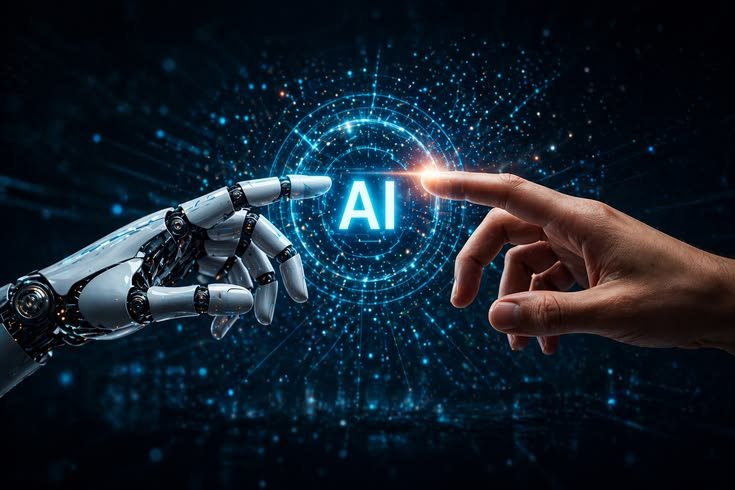
Artificial Intelligence is rapidly becoming an important part of modern business technology. From automating repetitive tasks to analyzing large amounts of data, AI can help businesses improve efficiency and make better-informed decisions.
Businesses across different industries are exploring AI-powered solutions to improve customer experiences, streamline operations and discover new opportunities. When implemented properly, AI can work alongside employees and existing business systems to create more efficient and intelligent workflows.
How AI Can Help Businesses
AI can support businesses in several areas and can be adapted according to specific business requirements.
-
Process Automation
AI can automate repetitive and time-consuming tasks, allowing employees to focus on more important business activities.
-
Data Analysis
AI-powered systems can process large amounts of information and help businesses identify useful patterns and insights.
-
Customer Support
AI chatbots and virtual assistants can provide quick responses to common customer questions and improve communication.
-
Personalized Experiences
Businesses can use AI to understand customer behavior and provide more relevant content, products and services.
-
Improved Productivity
By reducing manual work and assisting employees with routine tasks, AI can help teams work more efficiently.
The future of business technology will increasingly involve intelligent systems working together with people. AI can be integrated into CRM platforms, websites, mobile applications, analytics systems and other business software. However, successful AI implementation requires more than simply adding an AI tool. Businesses need to identify the right use cases, understand their data requirements and choose technologies that support their long-term goals. A practical approach is to start with specific business problems where AI can provide measurable value and gradually expand its use as the organization gains experience.
AI and the Future of Business Technology
The future of business technology will increasingly involve intelligent systems working together with people. AI can be integrated into CRM platforms, websites, mobile applications, analytics systems and other business software.
However, successful AI implementation requires more than simply adding an AI tool. Businesses need to identify the right use cases, understand their data requirements and choose technologies that support their long-term goals.
A practical approach is to start with specific business problems where AI can provide measurable value and gradually expand its use as the organization gains experience.